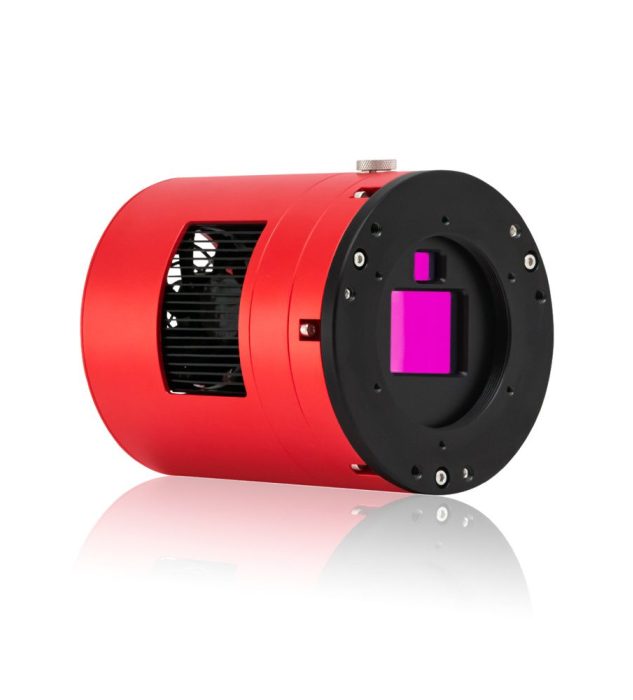
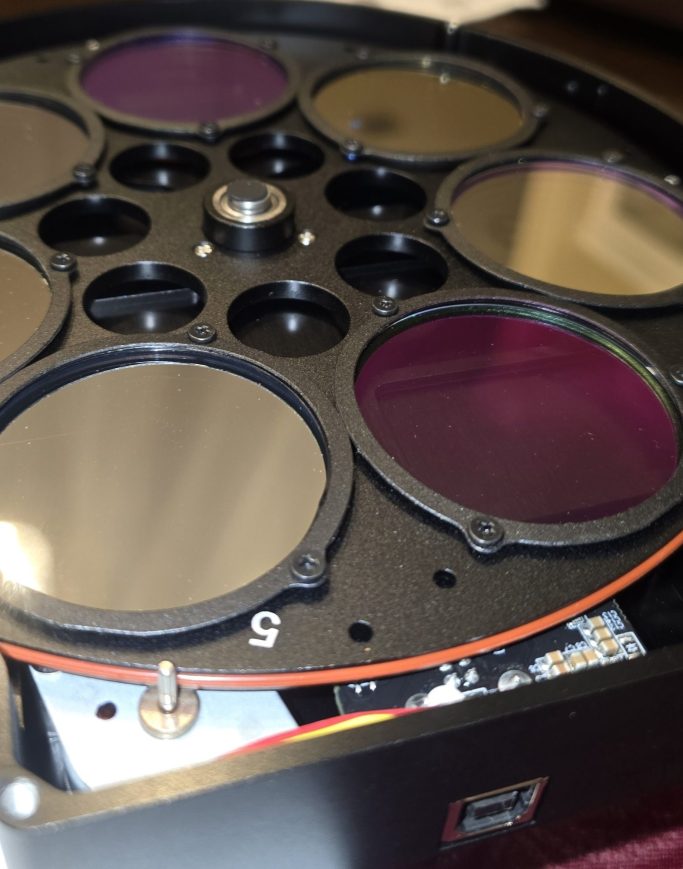
ZWO ASI2600MM Pro - Self guided with 2" 8 position FW. Baader 2" LRGBHA, OIII, SII filters
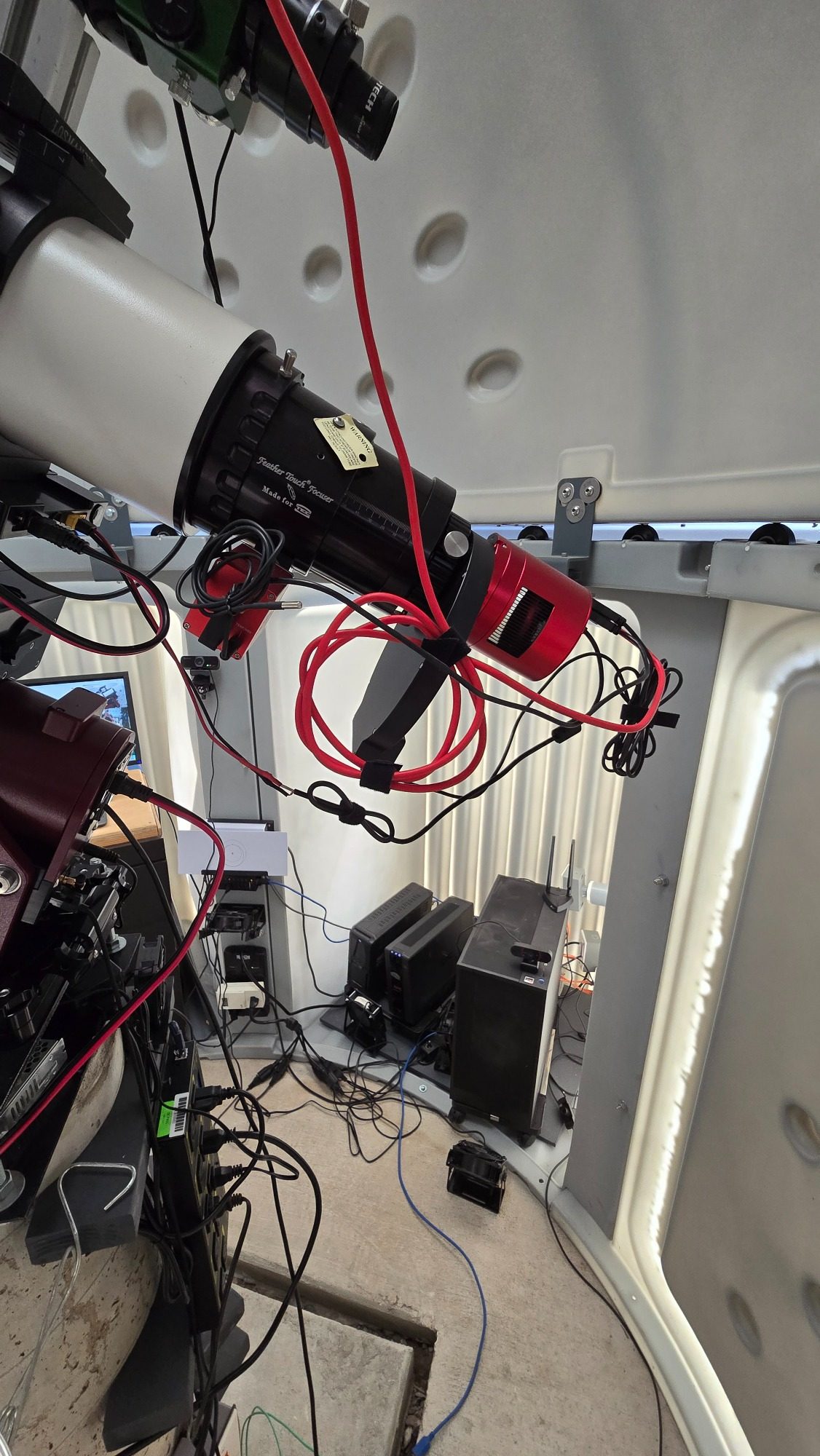
All digital cameras are black and white - ONE critical difference; Cell phone cameras, DSLR cameras and some astromomy cameras have a Bayer filter covering the entire sensor. Monochrome astonomy cameras use a single sensor with a large filter single color or wave length covering the sensor.
There are two main types of cameras one can use for imaging the night skies. A 'one shot' color or a monochrome camera with color (and other wave-lenghts) filters. There are advantages to each type of camera so your choice is personal (and technical if you wish to image large nebulae) which we will discuss shortly.
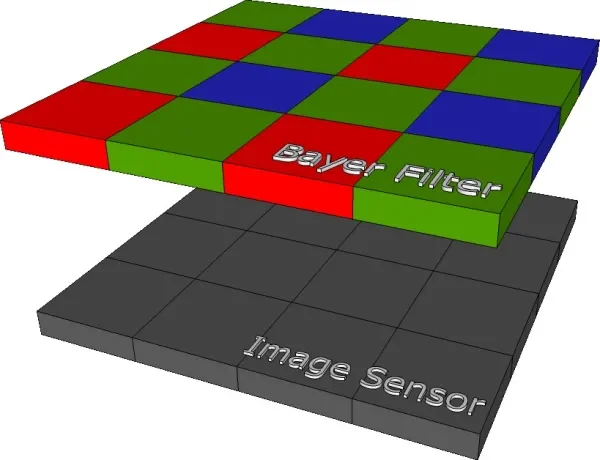
The Bayer Filter camera
Ok, one thing about digital cameras, they are ALL black and white. What produces a color image on your iPhone, Galaxy or DSLR, is a matrix of very small color lenses called a Bayer filter placed over you imaging chip. These filters use the data from you phone to create a color image Think of the Bayer filter as a blanket over you imaging chip with tiny RGB lenses over the pixels. One poriton produces a red channel, the other a green, and the last a blue.
These camera can produce great imagaes at the cost of overall resolution.
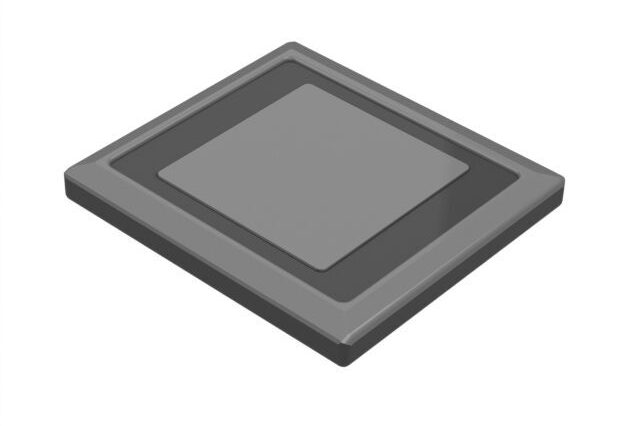
Monochrome
camera
My ASI2600MM
Now, imaging the same imaging chip as the Bayer camera example where there is no filter over the pixels. Replace the enitre Bayer filter with a large single, one color filter for all the pixels. One Red, Green, and Blue filter over the whole chip. You receive more resolution but will be required to shoot seperate frames for each color and combine them later (the Bayer camera does this in one process).
Why I chose a Monochrome camera
I love both types of astrphography cameras and will have a single shot color on my smaller scope as soon as we are up and running.
One big difference with a monochrome camera is that you must use a filter wheel to capture color images, Also, to capture narrow band wavelengths (Oxygen II, Sulfer II etc.) a filter wheel must be used.
One shot color cameras are not capable of capturing Narrowband wavelengths.
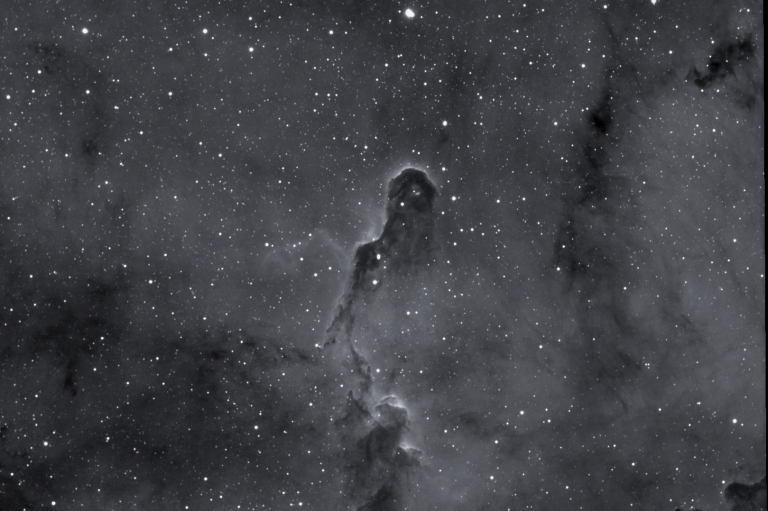
Should I want to see Hydrogen Alpha gas (as the image above shows) from a nebulae I need a monochrome camera with an HA filter. The same goes for capturing wavelengths of Oxygen III, Sulfer II. One needs specialized filters and a monochrome camera.
What are 'Subs'
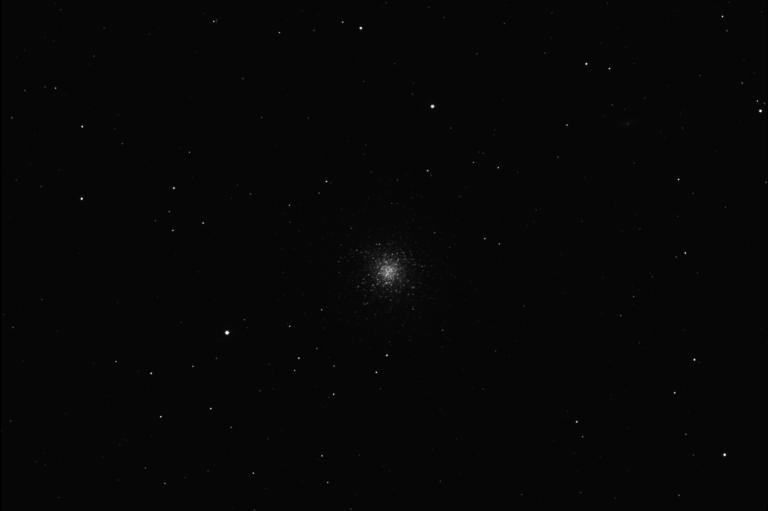
You may have heard some imagers say 'I captured this image using 10 minute subs, for a total of 2 hours of data'
So what is a sub? A sub simply refers to a single shot taken through each Red, Green, Blue or other filter(5, 10, 15, 20 mins etc). For astrophotography we use seconds in place of minutes, 300, 600, 900, etc.
Let's say I want one hour of data from my red filter. Should I set the camera to expose for 60 minutes? No, there are too many issues that can happen, satellite pass, airplane, wind, guiding errors that can ruin the image. Now you've waited an hour for bad data.
Solve the issue by taking 6, 10 minute exposures with each filter. You now have much better odds of capturing error free data. Typically, if I want 60 minutes from each filter I plan 90 minutes of data since something always happens. Wind, airplane passes, etc. Now you can use the best 6 subs for your final image combination. You receive the same total exposure.
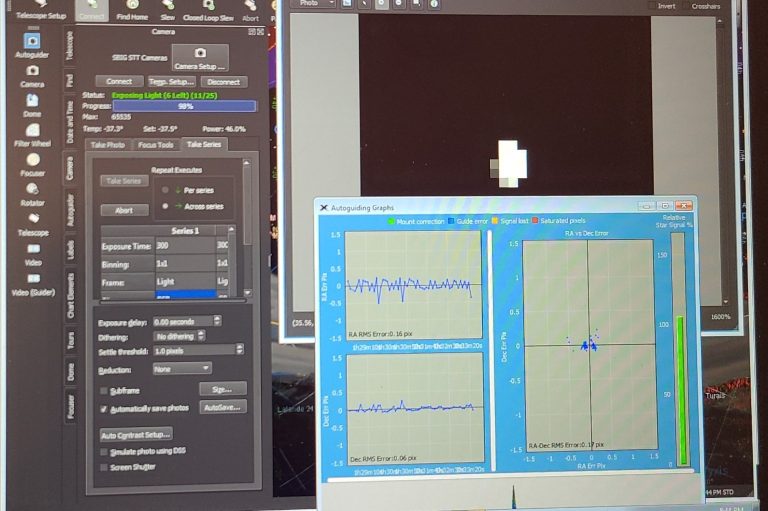
Guiding the scope
Nearly all imagers use a guider to capture their images. Due to manufacturing difficulties of creating a perfectly machined gear, periodic error, balancing issues, etc, guiding is almost always needed.
Think of imaging as using 2 cameras, one takes the image of what you want to see. The other camera focuses on a star in a narrow field of view at high power and monitors if that star moves. The guiding camera may take an image every 5 to 15 seconds say, and If the guide star moves from its initial position, a command is sent to the telescope mount to move (very slighly) in the opposite direction. The result? An image with round stars over a long period of time.
There are newer mounts with absolute encoders have essentially eliminated periodic error and other guiding issues which make unguided imaging possible.
The mount I own is a Software Bisque Paramount MX Series 6 with Absolute Encoders.
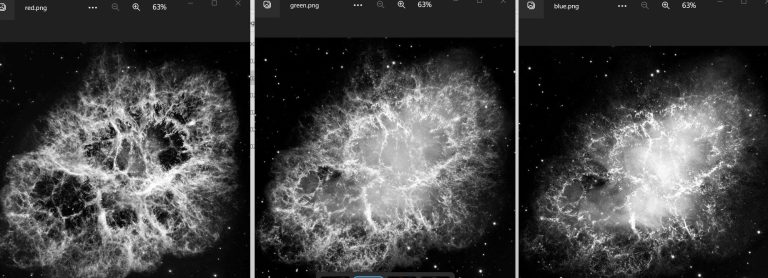
Creating the color image
Take a look at the images above. They are all of the Crab Neubla taken with different filters. Notice that each image looks slightly different. The reason is each color filter is able to see different wave lengths of light (red, green and blue). If each frame is combined into a single image to produce a final full color image Combining Red, Green and Blue images one can produce just over 16 million colors in 256 distinct levels of intensity.
Astonomers use specialized programs to clean up and align each color of frames and combine them to form a final image.
Powerful tool such as Pixinsight, Siril, Astro Pixel Processor, Deep Sky Stacker and many others are used to combine and create master astronomy images.